Your candle pantry: waxes, wicks, fragrances and vessels
The candle pantry tracks the four things every candle needs — wax, wick, fragrance, and vessel — so Ellie can build recipes that are safe and buildable from your real shelf.

In a candle workspace, your pantry has four shelves instead of the resin four. Keeping them current is what lets Ellie recommend a wick that fits your vessel, a fragrance load that's within spec, and the pour temperature your wax row states.
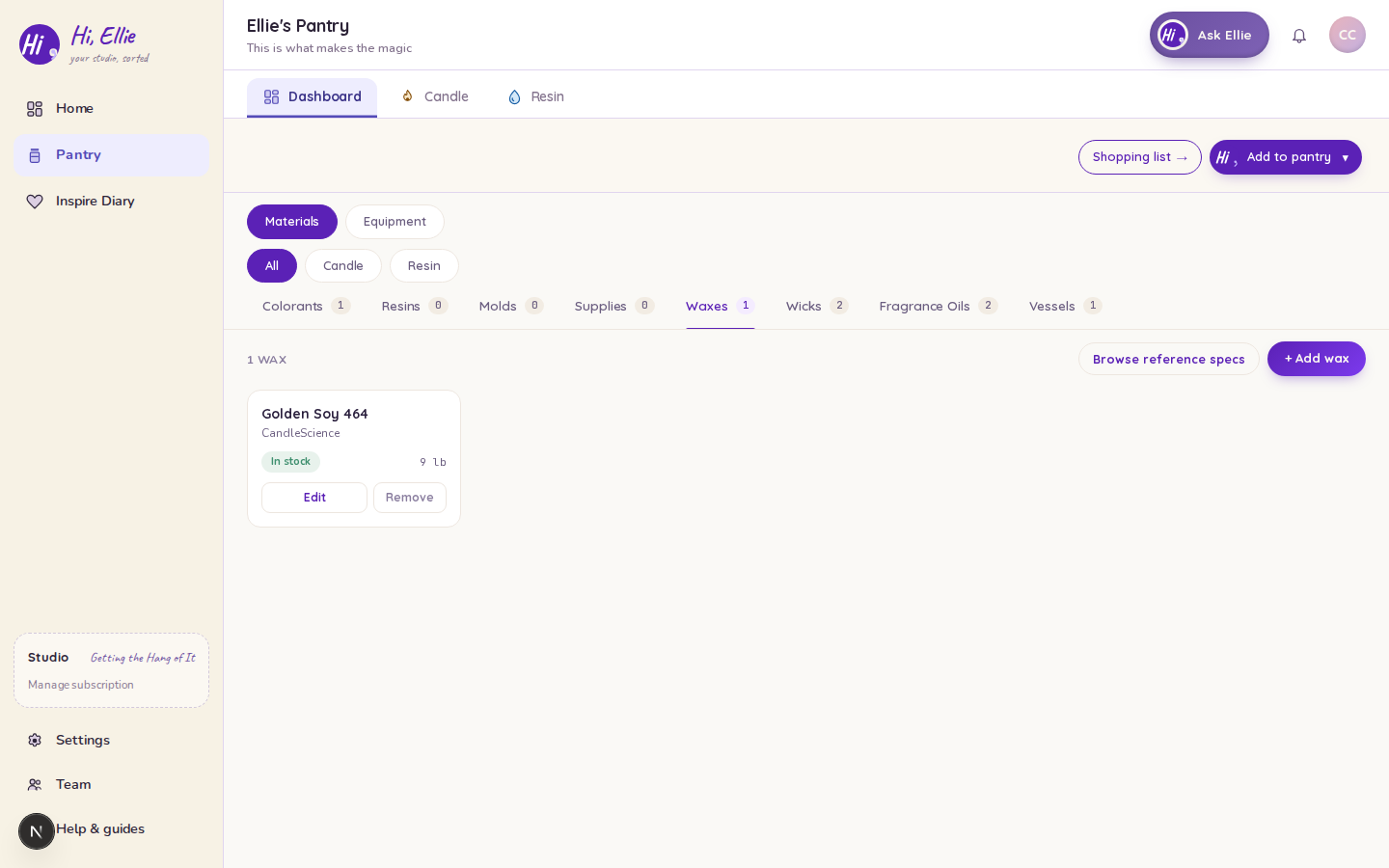
The four shelves
| Tab | What goes here |
|---|---|
| Waxes | Your soy, coconut, paraffin, parasoy, and gel waxes — with the melt point and recommended pour temperature. |
| Wicks | Your wick series and sizes — CD, ECO, HTP, LX, wooden, zinc — and the vessel diameter each is rated for. |
| Fragrance Oils | Your scents, each with a flash point and the supplier's max load for candles. |
| Vessels | Your jars, tins, and tumblers, with their fill volume and diameter. |
Switch shelves with the tabs at the top of the pantry. Which shelves you see follows your active craft — in a resin workspace the pantry shows Colorants, Resins, Molds and Supplies instead.
Adding items
Tap Add and choose the item type — Wax, Wick, Fragrance Oil, or Vessel. Fill in the name, brand, and quantity on hand, plus the fields that matter for that type. As with the rest of Hi Ellie, you can also add items from a spreadsheet or by snapping a label.
Two numbers Ellie leans on
Two fragrance details do real work, so it's worth getting them right:
- Flash point — the temperature at which an oil's vapour will ignite if something ignites it: a flame, a gas burner, a glowing element. It is a fact about your bench, not a limit on how warm the wax may be. Record it and Hi Ellie prints it on the recipe — the lowest across your blend, since the most volatile oil is the one that matters — and where your recipe heats the wax to or past that figure, the step itself asks for the no-flame rule: nothing burning under the pot, melt over a double boiler or in a thermostatic melter, and don't leave it. No recipe is refused or held back on account of a flash point. The one place it decides a choice is gel, which takes only oils rated for it — non-polar, with a flash point of 170°F or higher. That is a rule about which oil goes in, not about how hot you pour: gel is poured hot by design.
- Max load — the highest fragrance percentage the supplier rates for that oil in candles (usually tied to IFRA Category 12). Ellie doses fragrance as a percentage of your wax weight and never past this ceiling. More fragrance past the max doesn't mean more scent throw — it means sweating, a clogged wick, and a poorer burn.
If you don't know a fragrance's flash point or max load, check the supplier's product page or safety sheet and record it — Ellie would rather use your real number than guess.
Keeping stock current
Mark items In stock, Low, Out, or Needs order just like the resin pantry, and low items flow onto your shopping list. When you complete a batch, Ellie can draw down the wax, wick, and fragrance you used so your counts stay honest.
Tip: keep at least two wick sizes on the shelf for any vessel you're dialing in. Burn testing is a process of sizing up or down, and Ellie can only suggest a wick you actually have.